
The Lie We Prefer

Updated: Feb 21
Notes on the Four Noble Truths and the architecture of avoidance
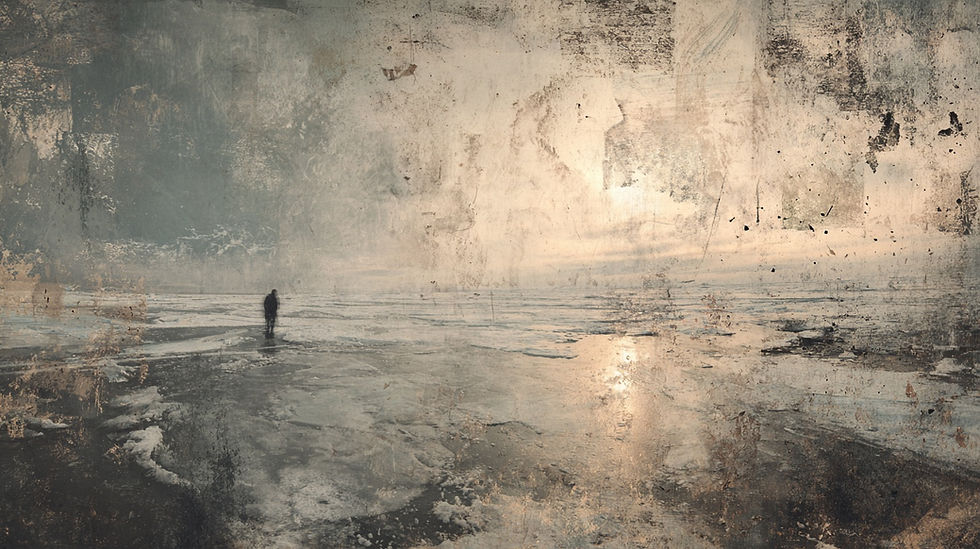
The Lunch
She said it in almost the same breath.
The importance of her weekly Bible studies. The need to seal off access to the valley so the liberals can’t invade. And the ICE agent who was forced to shoot that woman because she was trying to run him over.
Devotion. Exclusion. Justification. One breath.
She said liberals the way you’d say cockroaches. The word carried no content, required no definition. I wanted to stop her, ask: What is a liberal? Someone who believes in public schools? Someone who thinks healthcare shouldn’t bankrupt you? Someone who watched the videos you refuse to watch?
But I knew the question would be meaningless to her. The word isn’t a political position. It’s an incantation. A container for everything that threatens her frozen architecture. She doesn’t need to define it because defining it would require thinking about it, and thinking is the enemy of the ice. Say the word and you don’t have to see the person in front of you. Say it and they become a category. Say it and you’ve already won the argument you were never willing to have.
The lies have no foundation. That’s what I understood, sitting there. The architecture is built on air. Liberal means nothing. Invasion means nothing. Forced to shoot means nothing. The words are empty vessels filled with fear, and the fear is the only thing holding the structure up.
I looked away from her face—which had become, in that moment, impossible to look at—and out the window at the sun. The sun that doesn’t care about her taxonomy. The sun that has no opinion about who deserves to live. I was looking for something true, something that couldn’t be negotiated with, because the person across from me had abandoned truth entirely and I needed to find my footing somewhere.
There are videos. Endless witness videos showing the woman wasn’t trying to run anyone over. The evidence exists. It is accessible. But my lunch companion has no interest in looking for it.
This is the part I keep returning to: not the lie itself, but the no interest. The absence of curiosity. The decision—and it is a decision, made fresh each morning—to not know what can be known.
Something in me short-circuited trying to hold all of it as one reality. Bible study and border walls and a dead mother who deserved it. The architecture was complete, load-bearing, each piece necessary to keep the others standing. To remove any single element. To watch the video, to question the necessity, to wonder if blessed are the peacemakers might apply here. Would bring the whole structure down.
So she doesn’t look.
And I looked at the sun.
What Gets Lost in Translation
Twenty-five hundred years ago, a man who had been a prince sat under a tree and articulated something so simple it has taken humanity millennia to misunderstand it.
The First Noble Truth. In Pali: dukkha. In the Western mind: suffering. And there, in that translation, the trouble begins.
Suffering is a word that triggers the Western reflex: fix it, solve it, transcend it, make it stop. We hear life is suffering and we reach for the self-help book, the medication, the ideology that promises to exempt us from the human condition. We hear suffering and we think—not if I can help it.
But dukkha isn’t quite suffering. The word originally referred to a wheel whose axle doesn’t fit quite right. The persistent wobble, the off-center grinding that you feel in your teeth. Dukkha is the unsatisfactoriness woven into conditioned existence. The fundamental inability of anything. Any experience, any achievement, any relationship, any life—to provide permanent refuge.
The First Noble Truth isn’t pessimism. It’s democracy.
Everyone is subject. No exceptions. The Buddha, the billionaire, the refugee, the woman shot by the ICE agent, the ICE agent himself, my lunch companion with her Bible studies and her border walls. All of us riding the wheel with the ill-fitting axle. All of us feeling the wobble whether we admit it or not.
The lie begins the moment we create a category of acceptable casualties.
The Negotiation
Here is what I’ve come to understand, sitting with this for weeks now, still finding the shards of that lunch in unexpected corners of my thinking:
The lies we tell ourselves—political, personal, civilizational—are not rejections of the First Noble Truth. They are desperate attempts to negotiate with it.
The structure is always the same: This shouldn‘t be happening, therefore it isn‘t really happening, therefore I don‘t have to feel what I would feel if it were.
The lie is an anesthetic against dukkha. It’s not that my lunch companion doesn’t see the truth. It’s that seeing it would require accepting the First Noble Truth in all its terrible equality. And that acceptance feels like death to the ego’s project of permanence.
If she watches the videos, the woman becomes a mother. A person with a face, a history, people who loved her. The wobble of the wheel gets unbearable. The dukkha comes rushing in. Not just the suffering of the woman’s death, but the suffering of complicity, of being wrong, of having made peace with murder while calling herself Christian.
Better not to look.
Better to build the architecture of avoidance: the categories, the justifications, the borders between us and them that promise—falsely, always falsely—that the suffering can be kept over there. That if we draw the lines correctly, dukkha will happen to the people who deserve it and leave the rest of us alone.
The Ancient Lie
This is not new. This is not America, not this administration, not this particular historical moment.
The first lie was probably someone deciding their tribe’s suffering counted more. Some early human, sitting by a fire, drawing the first border between us and them. Creating the first category of acceptable casualties.
The Buddha saw this clearly. The Second Noble Truth: dukkha arises from craving, from clinging—tanha in Pali, sometimes translated as thirst. We cling to pleasure, to existence, to non-existence. We cling to the idea of a self that can be protected, a tribe that can be defended, a border that can keep the wobble out.
And we cling, above all, to the world being other than it is.
This is where the lies live. In the gap between what is and what we need to believe. In the desperate negotiation: not me, not mine, not my responsibility. The lie is the sound of clinging. The lie is the thirst for a reality that doesn’t wobble.
My lunch companion clings to a version of Christianity that has nothing to do with the man who was executed by the state for challenging power. She’s taken a tradition built on radical inclusion—love your enemies, blessed are the persecuted, whatsoever you do to the least of these—and bent it into a weapon of exclusion. The cross became a border. Blessed are the peacemakers became collateral damage.
But I am not innocent of this. None of us are.
The Wobble in My Own Wheel
I sat across from her and said nothing.
I looked at the sun because I couldn’t look at her face. I let the moment pass. I did not say: There are videos. I did not say: That woman was a mother. I did not say: How can you speak of Bible study and murder in the same breath?
My silence was its own negotiation with the First Noble Truth. The dukkha of confrontation, the wobble of conflict, the grinding discomfort of rupturing a relationship. I chose to avoid it. I chose the lie of neutrality. The lie that says it’s not my place, it wouldn’t change anything, why make things harder than they need to be.
And so the suffering continued. Hers, uninterrupted by truth. Mine, compounded by complicity.
This is what makes the Four Noble Truths so difficult. Not the abstract philosophy, not the foreign words, not the centuries of commentarial tradition. What makes them difficult is that they apply to everyone, including the person who is trying to apply them. Including me.
I am also clinging to the world being other than it is. I want a world where people don’t make peace with murder over lunch. I want a world where evidence matters, where videos change minds, where blessed are the peacemakers means what it says. I cling to that world, and every time reality shows me the gap, I feel the wobble.
The difference—if there is one, and some days I’m not sure there is—is that I am trying to feel the wobble rather than build a wall against it.
The Frozen and the Flowing
The Second Noble Truth identifies the cause: tanha, craving, clinging. We grasp at pleasure, at existence, at the world being other than it is. And in that grasping, we freeze the suffering into something solid.
Dukkha in motion is just the wheel wobbling. Uncomfortable, yes, but passing. Dukkha frozen is something else entirely. It becomes identity. It becomes ideology. It becomes the architecture of a life built on not-seeing.
My lunch companion has frozen her suffering into certainty. The categories are rigid: us and them, Christian and liberal, deserving and collateral. The ice is thick. It would take something catastrophic to break through. The kind of personal dukkha that can’t be categorized away. The death of someone she loves at the hands of the system she’s made peace with. The wobble that finally cracks the ice.
I don’t wish that on her. I don’t wish that on anyone.
But I wonder, sometimes, in the honest hours of early morning: is there any other way? Can the frozen be thawed without catastrophe? Or is the ice too thick, the investment too deep, the cost of melting too high to bear voluntarily?
The Buddha left his palace. He saw a sick man, an old man, a corpse, a wandering ascetic—and the ice of his privileged existence cracked. But he had to see. He had to let the images in. If his father had succeeded in sealing the valley, in keeping the suffering out, would the Buddha have remained a prince forever, frozen in his beautiful lie?
What the Truth Requires
The Third Noble Truth says suffering can cease.
I have read this a thousand times. I have sat with teachers who spoke of it with such calm certainty, as if cessation were a room you could walk into, a shore you could reach if you just kept swimming. Nirodha, they call it. The ending. The blowing out.
But here is what they don’t tell you, or what I couldn’t hear until now: the path to cessation is not around the suffering. It is through it.
The woman at lunch has found a way to suffer less by lying. She has built her walls, sealed her valley, created her categories of acceptable death. And within those walls, I imagine, there is a kind of peace. The peace of not-knowing. The peace of the frozen lake. Still on the surface, everything suspended beneath.
I have chosen differently. I have chosen to watch the videos. To read the testimonies. To sit with the names of the dead until they become people rather than statistics. To let the suffering in rather than build walls against it.
And it is breaking me.
This is the paradox at the heart of the Third Noble Truth, the thing I don’t hear discussed in the meditation halls with their expensive cushions and their soft-voiced teachers: the path to cessation requires more suffering, not less. It requires seeing clearly. And seeing clearly, in this world, in this moment, means witnessing horrors that those who look away are spared.
She sleeps soundly, I imagine, in her sealed valley. I lie awake with the faces of mothers shot by men who were given permission.
The Exhaustion of Witness
I am tired.
I am tired of seeing. Tired of knowing. Tired of carrying the weight of truths that others have decided not to carry. Tired of lunches where I look at the sun because the person across from me has become unbearable.
The bodhisattva vow says: Beings are numberless; I vow to save them. But what does that mean when the beings don’t want to be saved? When they’ve built their walls so high and so thick that saving them would require demolition? When saving them might look, to them, like destruction?
The mother who was shot was a being. The agent who shot her was a being. The woman at lunch is a being. I am a being. We are all caught in the same wheel, all feeling the wobble whether we admit it or not. The difference is only in what we do with the grinding.
Some of us freeze it. Some of us let it flow.
And those of us who let it flow carry more weight. That’s the truth of it. That’s the cost of the path. The Third Noble Truth promises cessation, but it doesn’t promise ease. It doesn’t promise that the journey will be lighter than the staying still. It only promises that somewhere, on the other side of all this seeing, there is a shore.
Some days I believe in the shore. Some days I think I’m just drowning with better theology.
Pick and Choose
Here is what I keep returning to, the question that won’t let me rest:
The Eightfold Path and the Ten Commandments are pointing at the same truth. Right speech, right action, right livelihood. Don’t murder. Don’t bear false witness. Don’t covet.
In that single breath at lunch, she broke at least three:
Thou shalt not kill—or at minimum, she made peace with killing, which is a form of participation. The hands that pull the trigger and the mouths that call it justified are working the same side of the equation.
Thou shalt not bear false witness—the videos exist. The evidence is accessible. She chooses the lie.
Thou shalt not covet—seal the valley, keep them out, this land is mine and mine alone. The borders we build are monuments to covetousness, to the belief that there is not enough, that they will take what is ours.
And yet: Bible study. Weekly. The form without the substance. The ritual without the transformation.
How do you pick and choose which commandments are true and which are negotiable? How do you read blessed are the peacemakers and love your enemies and whatsoever you do to the least of these, you do to me—and then call a mother’s death acceptable collateral?
You can’t. That’s the answer. You can’t pick and choose.
The path—either path, Buddhist or Christian—doesn’t allow for categories of exception. Right action doesn’t say except toward those people. The commandments don’t say thou shalt not murder unless. The moment you create an exception, you’ve left the path. You’re in the wilderness of your own making, following a map that leads only in circles, back to the suffering you were trying to escape.
And yet. And yet.
Half the country, it seems, has decided that the exceptions are the point. That the path was always negotiable. That love your neighbor meant love your neighbor who looks like you, thinks like you, votes like you. That blessed are the persecuted meant blessed are we when we feel persecuted by the existence of people who are different.
The picking and choosing is itself the lie. And the lie has become the truth for those who tell it often enough.
And here is the bitter irony that sits at the center of all this, the thing I wanted to say at lunch but didn’t, the truth that would have ended our friendship and changed nothing:
Christ was a liberal.
By any definition that has meaning, the man she studies weekly would be on the other side of her sealed valley. He healed on the Sabbath when the law said don’t. He ate with tax collectors and prostitutes when respectable people said don’t. He touched lepers when everyone said don’t. He said the quiet part loud about the rich and the kingdom of heaven. He stood with the woman about to be stoned and asked who among you is without sin.
He was executed by the state for threatening the order of things.
And now his followers sit at lunch and make peace with the state executing mothers, and call it justified, and say the word liberal like it means something other than the values their own scripture demands.
The cross became a border. The gospel became a weapon. And the man who said blessed are the merciful has been conscripted into blessing the merciless.
She would not see it this way. She would say I don’t understand, that I’m twisting the words, that context matters, that it’s more complicated than that. And maybe she’s right that I don’t understand. I don’t understand how you read the Sermon on the Mount and come away ready to seal the valley. I don’t understand how you study whatsoever you do to the least of these and decide that some of these don’t count.
But then, understanding was never the point. The lie doesn’t need to be understood. It only needs to be repeated.
The Fourth Truth
The Fourth Noble Truth is the path itself. The Eightfold Path: right view, right intention, right speech, right action, right livelihood, right effort, right mindfulness, right concentration.
I used to think of these as instructions. A checklist. Do these eight things and suffering will cease. But that’s the Western mind again, turning wisdom into productivity hacks, enlightenment into optimization.
The path isn’t a checklist. It’s a way of being. Each element contains all the others. Right view leads to right intention leads to right speech leads back to right view. You don’t complete them; you practice them. Endlessly. Imperfectly. With great exhaustion and occasional glimpses of something that might be freedom.
And here is what I’m learning, sitting with my exhaustion, sitting with that lunch that won’t stop reverberating: the path doesn’t promise that others will walk it with you. It doesn’t promise that your right speech will be met with right listening. It doesn’t promise that your clear seeing will clarify anyone else’s vision.
The path is solitary, even when you’re surrounded by others. Even when you’re sitting across a table from someone who has chosen a different way entirely.
You walk it anyway. That’s the teaching. You walk it not because it will change her, but because it’s the only way to stay human in a world that is actively dehumanizing. You practice right speech even when no one is listening. You practice right action even when the action seems to change nothing.
And maybe—maybe—in the walking, something shifts. Not in her. In you. The suffering doesn’t disappear, but it becomes bearable. It stops being frozen and starts to flow. The wheel still wobbles, but you stop fighting the wobble and learn to ride it.
Maybe that’s what cessation means. Not the absence of dukkha, but the end of the war against it.
The Sun
I think about that moment often. Looking away from her face, out the window, at the sun.
The sun that doesn’t care about our taxonomies. The sun that shines on the sealed valley and the open border, on the Bible study and the detention center, on the living mother and the dead one. The sun that has been watching us build our walls and tell our lies since the first human drew the first line between us and them.
I was looking for something true. Something that couldn’t be negotiated with.
And maybe that’s what the Four Noble Truths are, finally. Not wisdom to be attained. Not a path to be completed. Just something true. Something that has been true since the Buddha sat under his tree and will be true long after we’ve exhausted ourselves with our lies and our walls and our categories of acceptable suffering.
Life wobbles. We cling to the wobbling and make it worse. The clinging can stop. There is a way to live that doesn’t require the lie.
She chose the lie. I chose the seeing. Neither of us has escaped the wheel.
But I looked at the sun. And I am still looking.
That has to count for something. Even if I don’t yet know what.
©2026 Gael MacLean


